




When it comes to digital marketing, businesses often face the tough decision of whether to invest in Search Engine Optimization (SEO) or Pay-Per-Click (PPC) advertising first. Both strategies have their merits and can lead to substantial growth for your business, but which one should you focus on first? The answer depends on a variety of factors, including your goals, timeline, budget, and resources.
In this blog, we’ll dive into the differences between SEO and PPC, explore the pros and cons of each, and help you decide which strategy to prioritize based on your business needs.
What is SEO?
Search Engine Optimization (SEO) is the process of optimizing your website to rank higher in organic search results on search engines like Google, Bing, and Yahoo. The goal is to improve the visibility of your website by optimizing content, technical elements, and backlinks, so that your site appears in search results when users look for relevant keywords.
Key SEO Tactics Include:
On-page SEO: Optimizing website content, headings, meta descriptions, and images.
Off-page SEO: Building quality backlinks to increase site authority.
Technical SEO: Ensuring that the website is technically sound, with fast load times, mobile optimization, and clear site structure.
Content Creation: Developing high-quality content that provides value to your audience.
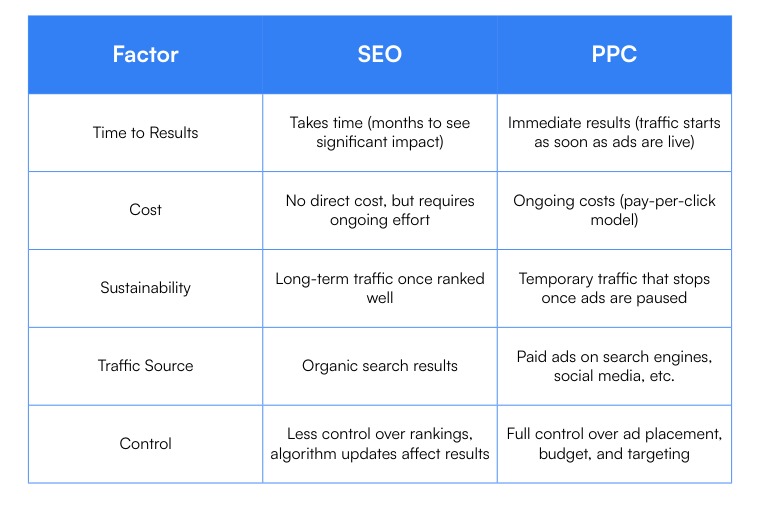
SEO is a long-term investment, as it takes time to see tangible results. However, once your website ranks well, it can continue to attract organic traffic without ongoing costs.
What is PPC?
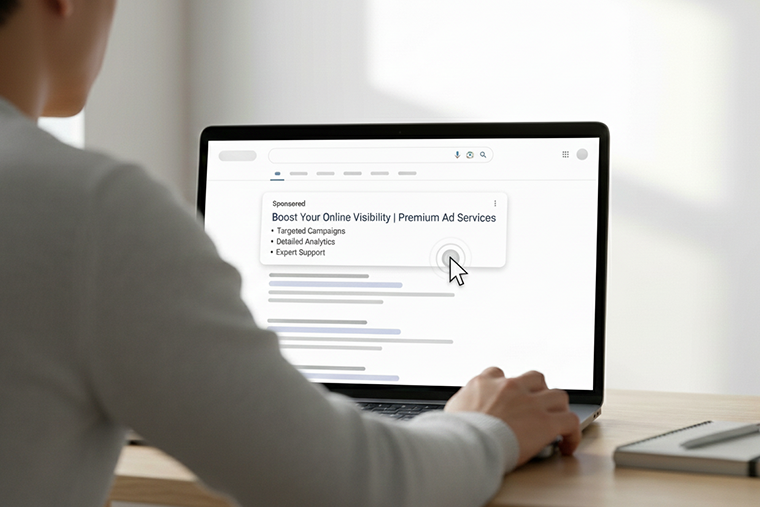
Pay-Per-Click (PPC) advertising involves placing ads on search engines or other platforms, where you pay each time a user clicks on your ad. The most common platform for PPC ads is Google Ads, but other platforms like Facebook Ads and LinkedIn Ads are also popular for paid campaigns.
Key PPC Tactics Include:
Keyword Targeting: Selecting keywords for which you want your ads to appear in search results.
Ad Copywriting: Creating compelling ad copy that encourages users to click.
Landing Page Optimization: Ensuring that the page users land on after clicking the ad is relevant, engaging, and optimized for conversions.
Bid Management: Setting bids for keywords and monitoring performance to optimize cost per click (CPC).
PPC offers immediate results and allows you to target specific audiences based on factors like location, device, and behavior. However, it requires ongoing spending, and the results stop when you stop paying.
SEO vs. PPC: Key Differences
SEO vs. PPC: Which One Should You Focus On First?
Focus on SEO First if:
You Have a Long-Term Vision: If you’re looking to build sustainable, long-term growth, SEO is the way to go. While it takes time to rank on search engines, once you’re there, you can benefit from free, organic traffic without the need to continuously pay for ads.
You’re Operating on a Limited Budget: SEO has no direct costs for clicks, so it’s more cost-effective in the long run. You can invest in high-quality content and on-page SEO without worrying about ongoing ad spend.
You Want to Build Brand Authority: Ranking for relevant keywords in search results helps build trust and authority in your niche. It also boosts your organic traffic and improves your website’s credibility.
Your Industry Is Highly Competitive: SEO can help you outshine competitors with strong content, a well-optimized website, and relevant keywords. Over time, your site’s domain authority will increase, making it harder for competitors to outrank you.
Focus on PPC First if:
You Need Immediate Results: If you have an urgent need for traffic, PPC is the better choice. You can see immediate results, making it ideal for time-sensitive campaigns or product launches.
You Have a Specific Budget: PPC allows you to control your spend more easily. If you’re able to set a fixed budget for ad campaigns, PPC can help drive targeted traffic with immediate results.
You’re Targeting a Specific Audience: With PPC, you can target specific keywords, geographic locations, and demographics. This makes it a great option for campaigns where you need to reach particular customer segments quickly.
You Have New or Seasonal Products: If your product is new or seasonal, PPC can help you quickly gain visibility in search engines for related keywords. This is especially useful for limited-time offers or product promotions.
SEO vs. PPC: Which One Should You Focus On First?
Webflow
-Native CMS, webhooks, and tools like Zapier/Make cover many marketing workflows.
-Custom embeds and Apps fill gaps without a full plugin system.
-Clean for form-to-CRM, headless search, simple personalization.
WordPress
-Vast plugin ecosystem plus custom code for deep integrations (SSO, complex forms, DAMs, marketing automation, bespoke APIs).
-Headless options if you need a decoupled frontend.
Verdict: If your integrations sit at the “connect and sync” level, Webflow is enough. If you expect heavy, code-level integrations, WP is home base.
Can You Use Both SEO and PPC Together?
Yes! In fact, combining SEO and PPC can be a highly effective strategy for maximizing your online visibility.
SEO builds long-term, organic traffic, while PPC gives you immediate traffic and visibility.
Using both allows you to dominate the search results, with your website appearing in both organic search results and paid ad placements.
You can use PPC to test keywords and ad copy, and then apply insights to your SEO strategy for even better optimization.
For example, running a PPC campaign can help you identify high-converting keywords that you can then target with SEO. In return, your organic search ranking can help improve the performance and quality score of your PPC ads.
Conclusion: SEO or PPC? It Depends on Your Goals
Both can rank. What matters is clean markup, crawlable architecture, fast pages, and careful migrations.
Webflow
-Straightforward meta control, redirects, sitemaps.
-Component-driven content keeps structure tidy.
WordPress
-Deep control over technical SEO through your stack (and a small list of reputable plugins).
-More knobs = more responsibility to keep them set correctly.
Migration steps (either direction)
-Crawl and export URLs, titles, meta, canonicals.
-Map 1:1 redirects; handle ed
When deciding whether to focus on SEO or PPC first, consider your business objectives, timeline, and budget. If you’re looking for immediate traffic, PPC is the best choice. However, if you want long-term, sustainable growth, investing in SEO should be a priority.
Ultimately, SEO and PPC aren’t mutually exclusive. In fact, combining both can give you the best of both worlds—immediate results from PPC and long-term growth from SEO. For Fineart Design Agency, we specialize in helping businesses leverage both SEO and PPC strategies to drive immediate success and establish a solid foundation for future growth. By tailoring our approach to your unique goals, we ensure that your digital marketing strategy is both effective and sustainable.
ge cases (params, case, trailing slash).
-Preserve schema and structured data where relevant.
-QA staging in Search Console-style tests; ship during a calm period.
-Monitor logs and fix 404s in the first week.
